
How float therapy is a brainwashing tool
A story of my first (and probably last) float

This week, a group of friends and I tried sensory deprivation therapy.
I’ve always thought that this “float in a tank” stuff was solidly in the bucket of “hippie shit.” The website didn’t correct that assumption.
“The depths of [the] mind are as great as the depths of cosmic outer space”
Dr. John C. Lilly
Inventor of the sensory deprivation tank
That’s the first thing you see on the page.
The place in person also didn’t dispel my presumption. Walking in, we saw lots of dark colors, black foam, and a receptionist who, I assume, was especially trained to speak at half speed, and to use a deep, whispery baritone.
I think this added to the stress of one of my friends. He, rapid-fire, began rattling off questions. When do we pay? These two are on guest passes, is that ok? How long is the session? Do I take off my shoes?
The receptionist simply looked at him until he quieted. Then, she languidly gestured at a row of couches. “Sit.” she rasped.
I don’t usually go for hippie stuff, but I do go for novelty. And honestly? This was rather relaxing. The wavy soundscapes in the background, the dark and quiet environs, and the cool breeze was really doing it for me.
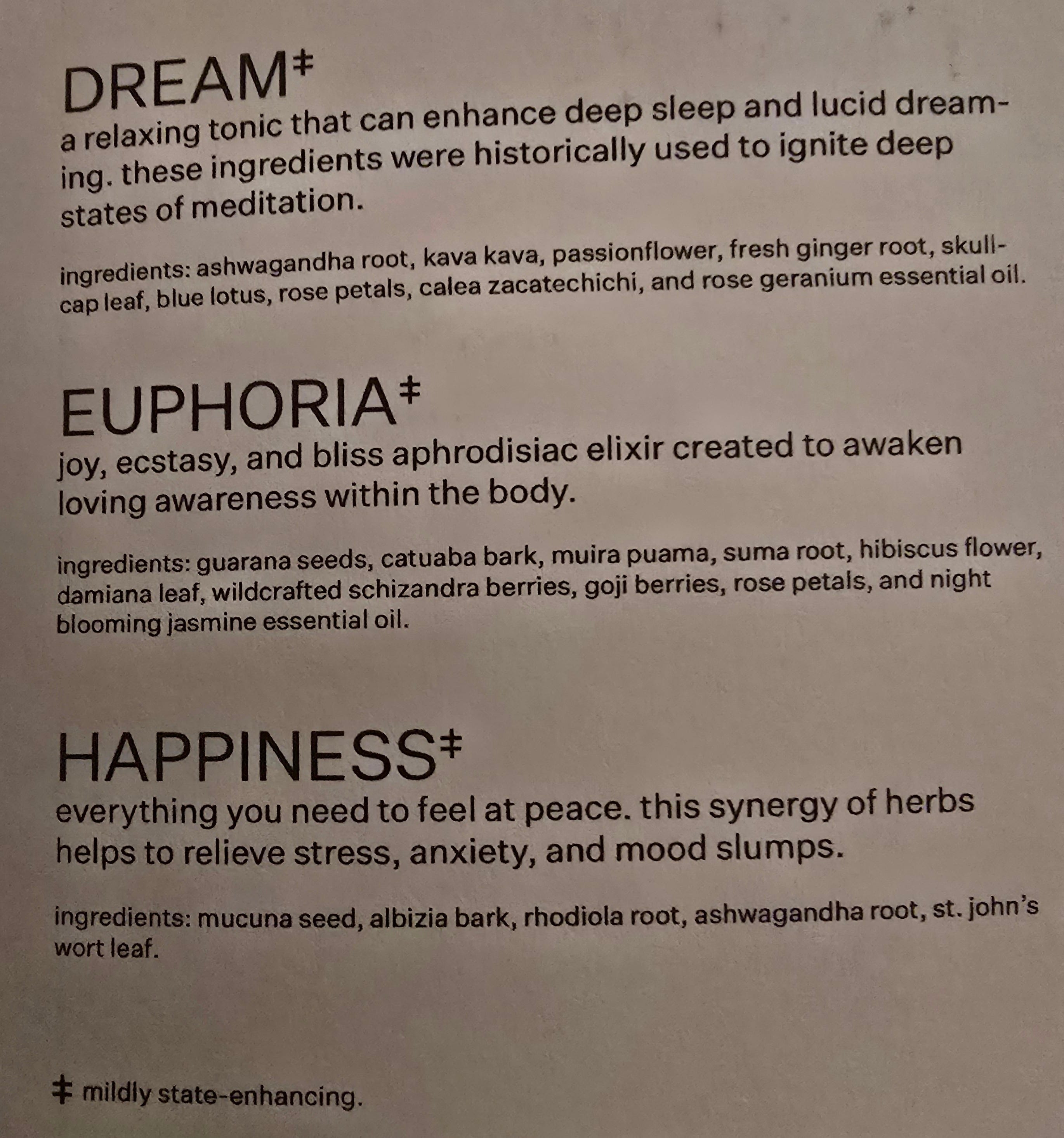
They started us off with a tea menu: you had your pick of several “adaptogenic” (read, slightly hallucinogenic) additives. Not my thing. Then, we picked a soundtrack for the float; notable options being silence, Aural Waves, and guided hypnosis. The attendant led us to our rooms, one by one; inside, I found a sink, shower, and the fabled float tank.
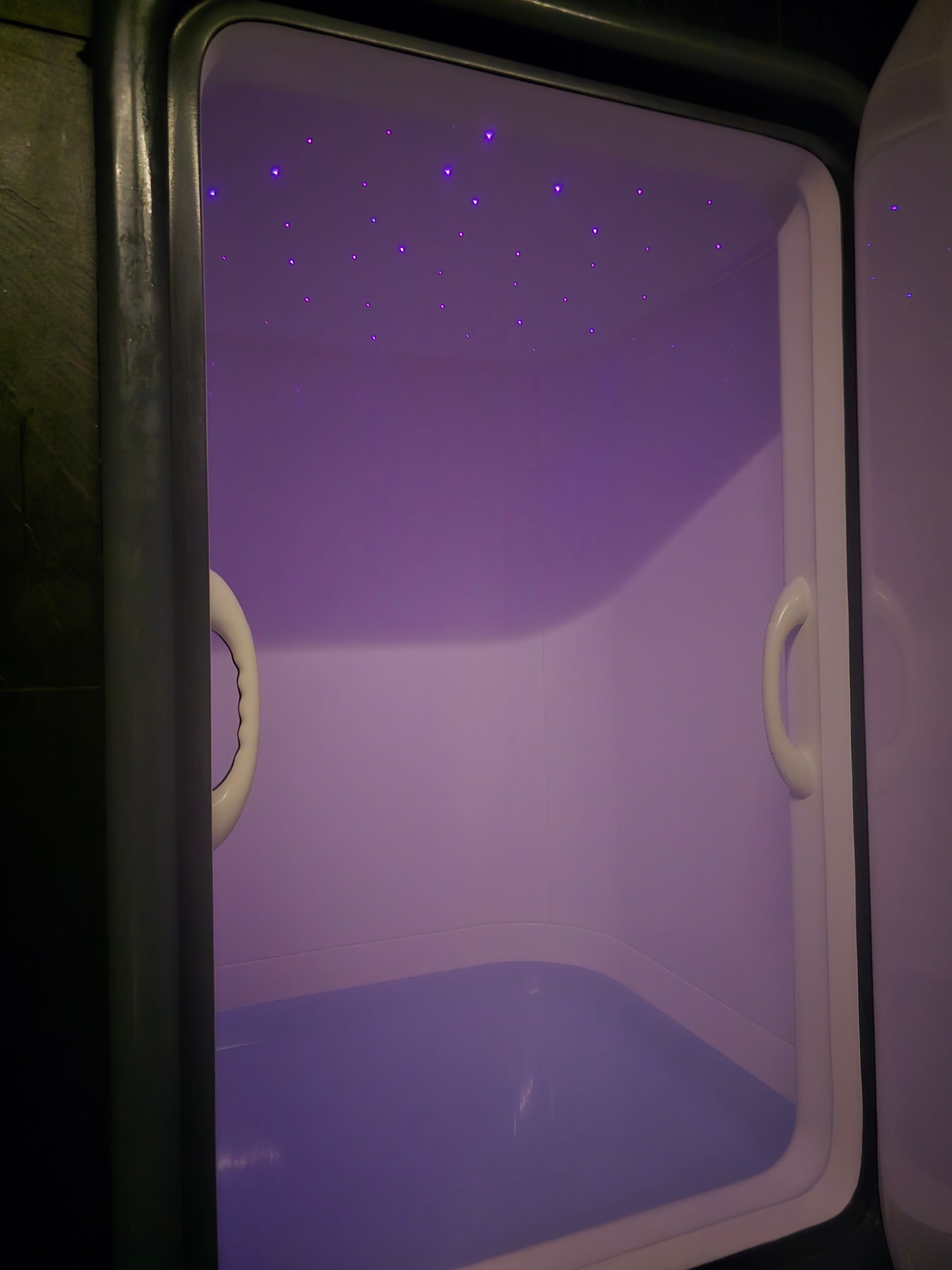
I jumped in. It was really fun! I was all floaty, and I splashed about. The water was a bit like jelly, and the same temperature as my skin. I closed my eyes, and progressively had Thoughts, ranging from the state of our democracy, to how we might address our ATC shortage, to why coconut water was pink but nobody makes pink coconut smoothies.
I was having a good time. Well, up until I realized that mild burning wasn’t part of the sensory experience, but instead the saltwater getting in my wounds… Huh. So that’s how they make you float.
So I jumped out, toweled off, and decided to finally google what, exactly, I had signed up for.
Here's what they don't tell you when you're paying $85 to float in a tank of salt water in trendy Greenpoint: You’re enjoying Cold War era brainwashing technology.
Sensory deprivation “therapy”
So that John C. Lilly guy? The one whose hippie space quote adorned the webpage of this float tank place? He wasn’t a wellness guru (yet). Instead, he was a neurophysiologist working at the National Institute of Mental Health in Bethesda, Maryland.
The year was 1954. With the aim of isolating a brain from external stimulation, Lilly and his colleagues designed the first isolation tank, a dark soundproof tank of warm salt water in which subjects could float for long periods in sensory isolation.
This wasn't just academic curiosity. Lilly's work occurred during what historians call the "Cold War brainwashing scare." The term "brainwashing" had just entered the American consciousness: “Brain-washing Tactics Force Chinese Into Ranks of Communist Party” headlines said. Captured American soldiers were seen in foreign propaganda, confessing to all sorts of crimes.
In a late-1950s paper, Lilly described his vision for the future of his research: the "behavioural modification and control of 'human agents.'" He believed that sensory isolation, combined with electrical brain stimulation and neural mapping, could achieve "push-button control over the totality of motivation and of consciousness." His ultimate goal? "Master-slave controls directly of one brain over another."
There I sat, right outside my brainwashing chamber. Hmm. The hallucinogenic tea. The option for guided hypnosis. Being walked down the dark hallway, one-by-one. Feels a bit more nefarious, in hindsight.
The Great Transformation
But then something extraordinary happened. Lilly had what can only be called a complete ideological reversal. He went hippie.

In the late 1950s, he left the NIMH. He went to the Virgin Islands, and established a facility devoted to fostering human–dolphin communication. Then, he joined the Search for Extraterrestrial Intelligence, as an expert in interspecies communication. Then, in the 1960s, he found LSD.
In 1968, Lilly published an article called "Programming and Metaprogramming in the Human Biocomputer" – a guide for individuals to explore and reprogram their own consciousness using isolation tanks, psychedelic drugs, and meditation.
The sensory deprivation tank was reborn as the float tank. The instrument of control became a technology of self-discovery.
Today, float tanks are trendy. NFL teams float as a way to increase performance. Modern float centers promote benefits like stress relief, muscle recovery, and meditation enhancement.
What once terrified Cold War officials – the malleability of human consciousness under extreme conditions – is now sold as a feature, not a bug.
The bell in my room rang. I walked out, and met my group. “How was it?” I asked my stressed friend. “Very relaxing,” he said. “My mind feels so clear.”